How to Coordinate Mother of the Bride and Mother of the Groom Outfits
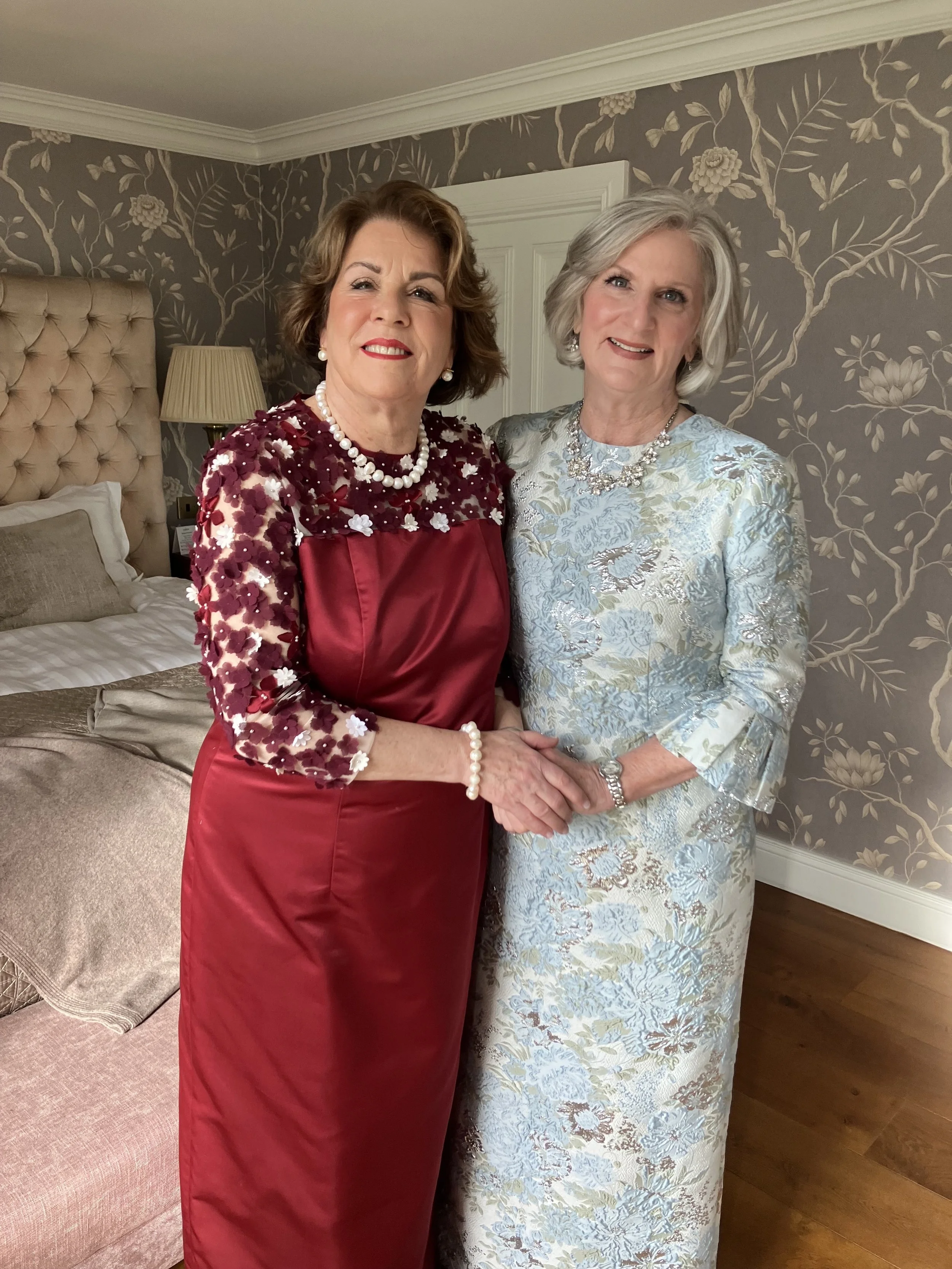
Current wedding culture creates a lot of anxiety around this topic because both mothers want to look appropriate without appearing overly coordinated. In reality, the most elegant pairings are rarely identical. The goal is not to match dresses—it is to create harmony in photographs and throughout the celebration.
Two women, two dresses, one set of photographs that will be studied for decades. Learning how to coordinate mother of the bride and mother of the groom outfits is less a matter of rules than of resolving a single question before it becomes an anxiety: how two family looks belong in the same frame without competing for it. The answer is direct, and it removes far more pressure than most women expect walking into this decision.
Coordinate, Don't Match
The most common question on this subject is whether the two mothers need to match. They do not — and attempting to match is usually where the trouble starts. Identical or near-identical dresses read as costume rather than family in photographs, and they compete with the wedding party's own palette. The correct standard is coordination: two dresses that share a formality level and a general color temperature while remaining unmistakably their own.
This is the distinction worth holding onto through every fitting and every fabric decision that follows. A gown that matches works against the room. A gown that coordinates works with it.
Color Temperature, Not Color Matching
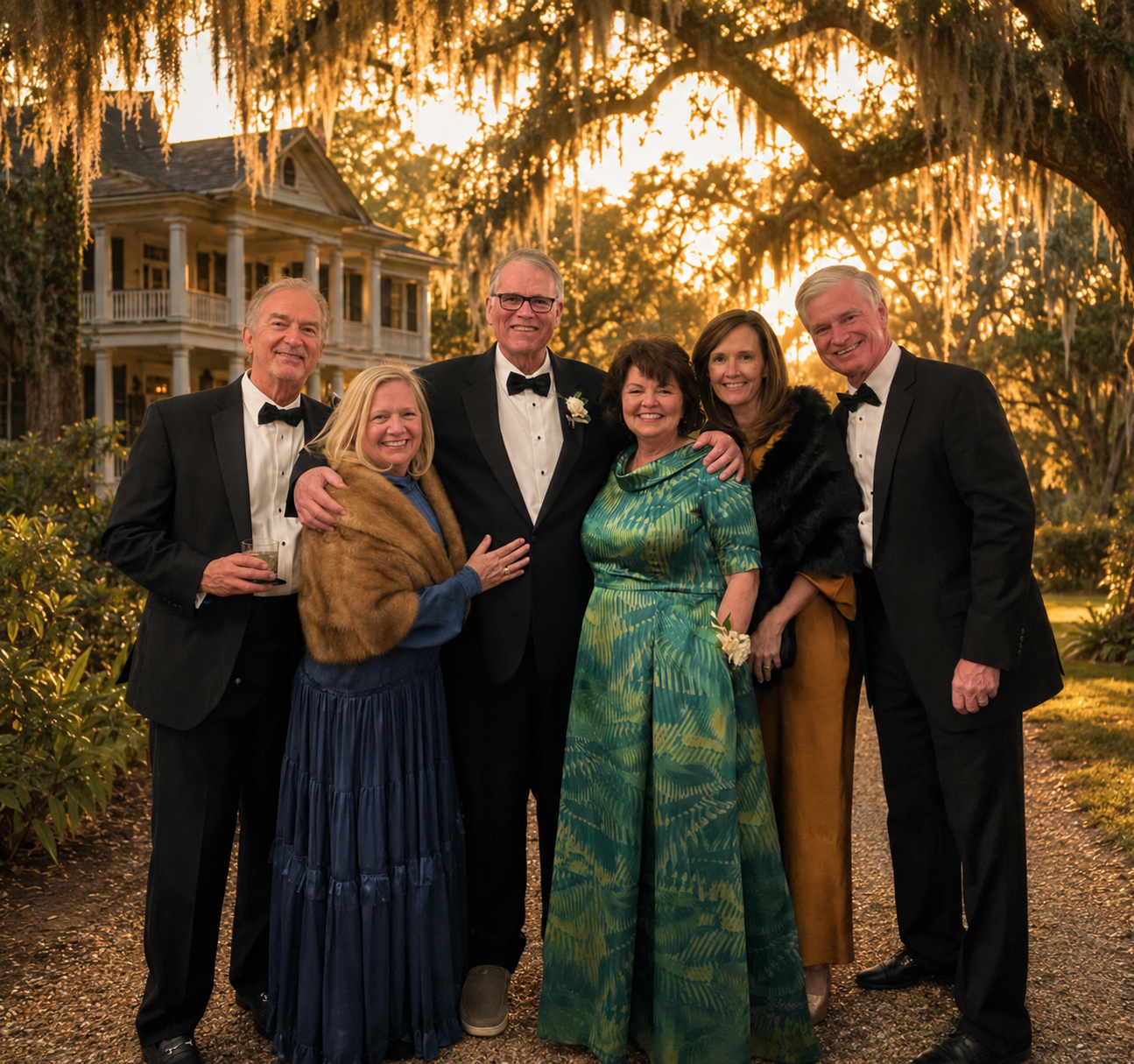
Mother of bride and mother of groom in the same color is not the goal, and chasing it usually produces the exact clash it was meant to avoid. What matters is temperature — whether a color reads warm or cool — not the hue itself. A sapphire and a deep plum share a cool, jewel-toned register and photograph beautifully side by side, even though neither dress resembles the other. A rich burgundy and a warm terracotta share the opposite register. What fails, consistently, is pairing a warm gold against a cool navy: two correct colors in isolation that visually argue with each other on camera.
This is where a season-informed palette earns its place. Deep emerald, sapphire, burgundy, and dusty rose are reading strongly across 2026 weddings, and any two of them, chosen with temperature in mind, will sit well together without a single conversation about matching.
Sequence Resolves the Rest
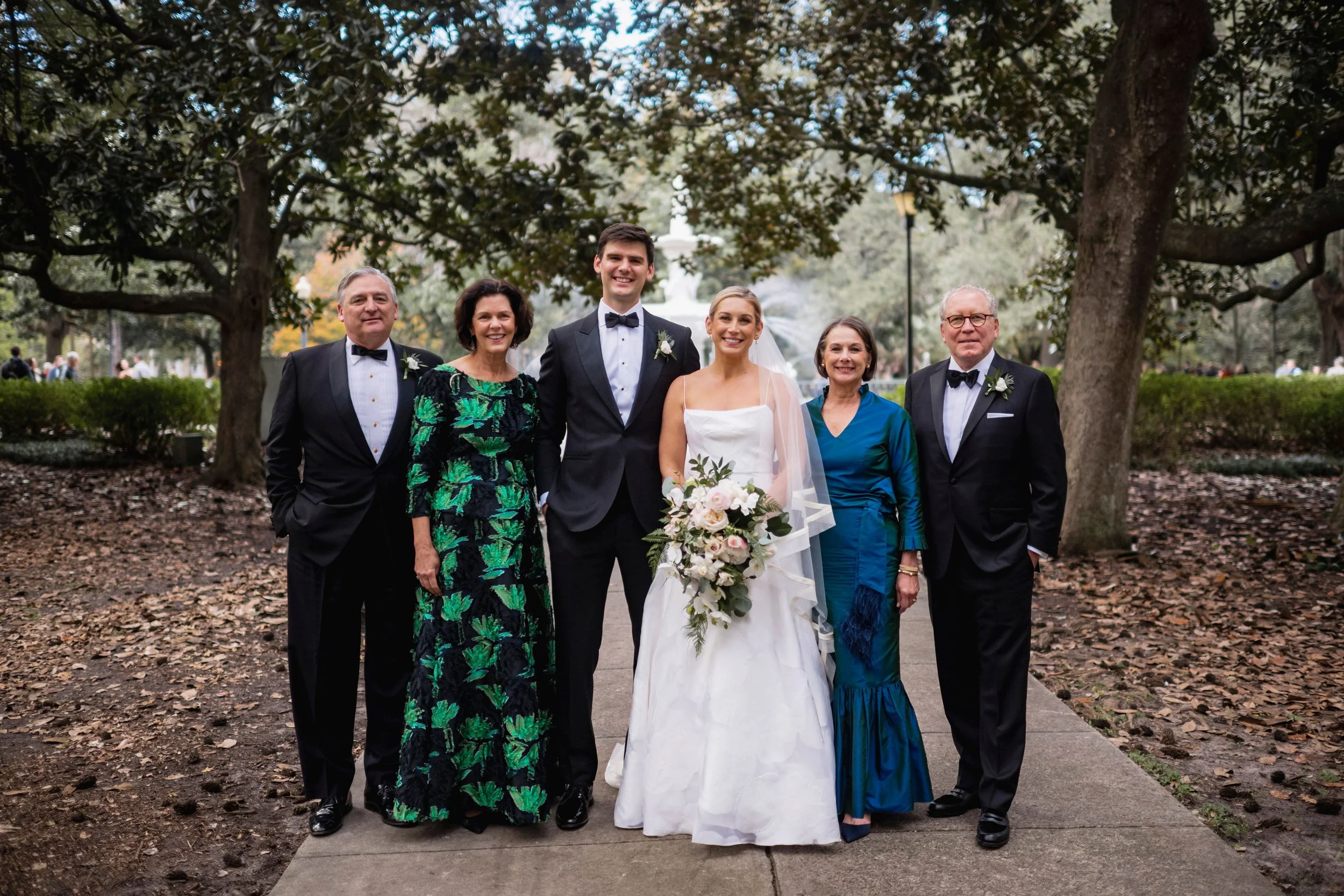
Coordinating wedding family outfits runs more smoothly when the sequence is settled early: the mother of the bride selects first. This is not a matter of protocol for its own sake — it gives the mother of the groom a fixed point to design against, rather than two women guessing simultaneously and arriving at a color collision neither intended. One direct phone call, early in the process, replaces months of uncertainty for both families.
At Gramercy, this sequence is built directly into the bespoke process. The details are not details — the details make the product, and coordinating two gowns properly requires knowing what the other woman is wearing before a single fabric is cut.
The Result Should Read as a Family, Not a Uniform
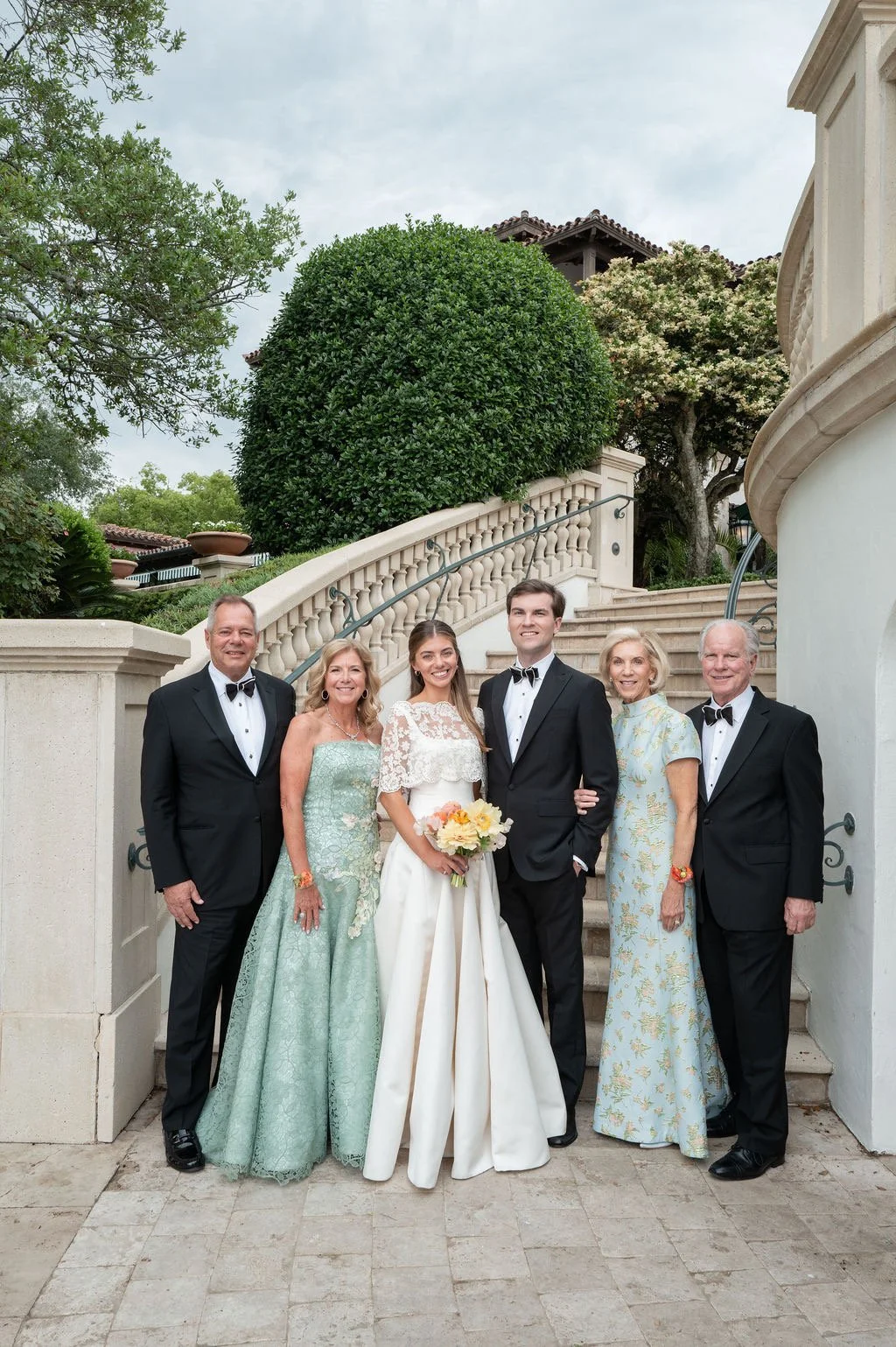
The finished pairing should communicate exactly one thing at a glance: these two women belong together in this photograph, and each of them is fully herself in it. Silhouette can differ. Fabric weight can differ. Neckline, sleeve, and hemline should be chosen for what flatters each woman individually. Formality and temperature are the only two elements that need to align.
This is precisely where bespoke earns its advantage over anything found on a rack. A gown made for the occasion with you in mind can be built to a known color temperature, a known formality, and a known counterpart — something no ready-to-wear collection is positioned to deliver, because no two women shopping separately are ever guaranteed to land in the same register by chance.
The conversation between two families over what to wear rarely needs to be complicated. It needs one early decision, one clear sequence, and two gowns built to belong in the same room. That process is already in motion for the families who begin it now, with enough runway to select fabric, confirm color temperature between both mothers, and move calmly toward a wedding day where every photograph holds together. The second most important dress at the wedding — and its counterpart — are worth exactly that level of attention.
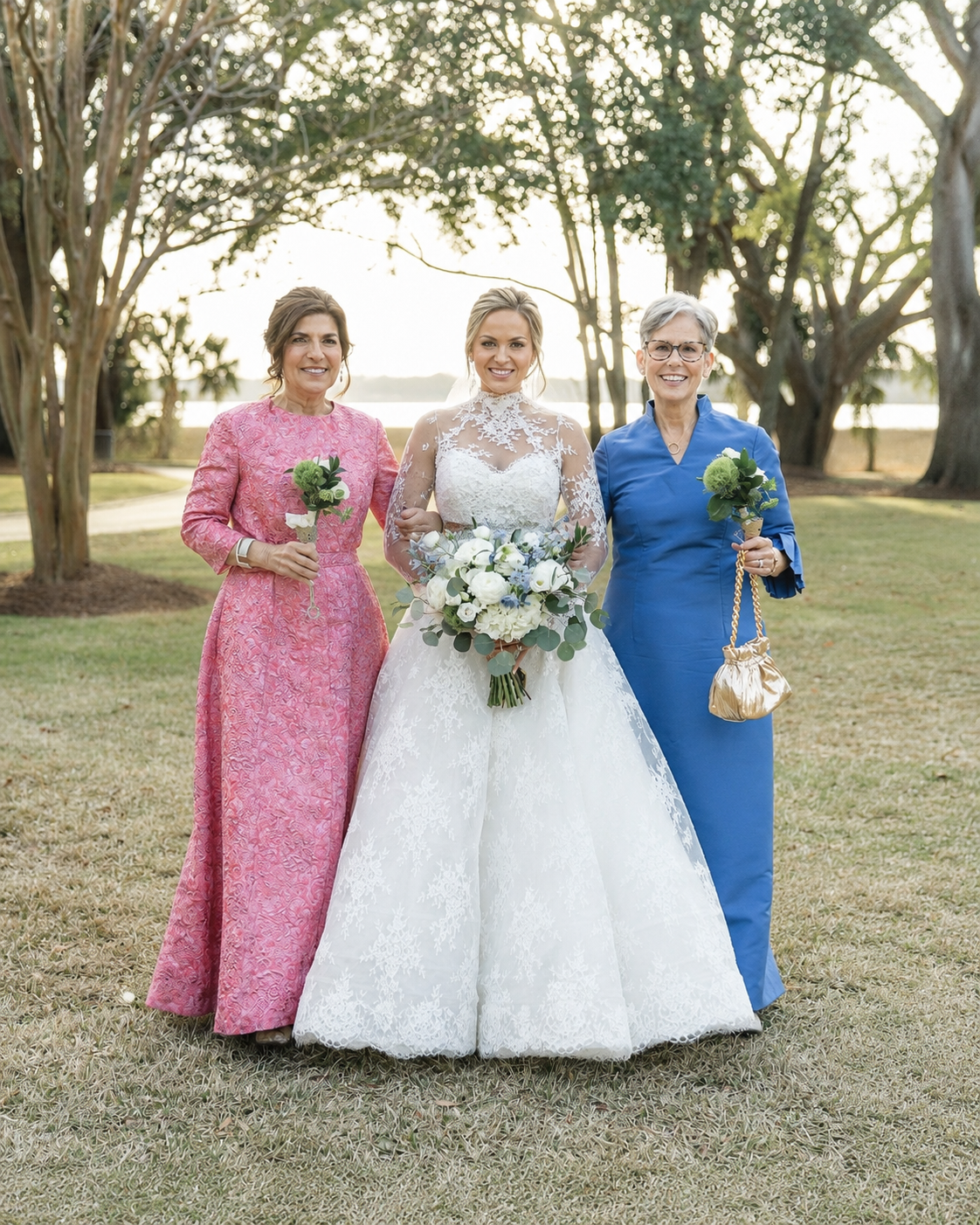
One of the most valuable conversations we have with mothers is not about a specific dress—it is about where they fit within the larger visual story of the wedding. When color, formality, and personal style are considered together, both mothers can feel confident and beautifully coordinated without sacrificing individuality.