Why Gold Appears at Moments of Transition
Gold has always meant more than celebration.
Across cultures, gold shows up not at casual moments, but at thresholds. Moments when something changes. When one chapter closes and another begins. When presence matters, and the choice is meant to endure beyond the evening itself.
This is why gold has remained so persistent in formal dress. Not because it sparkles, but because it holds meaning.
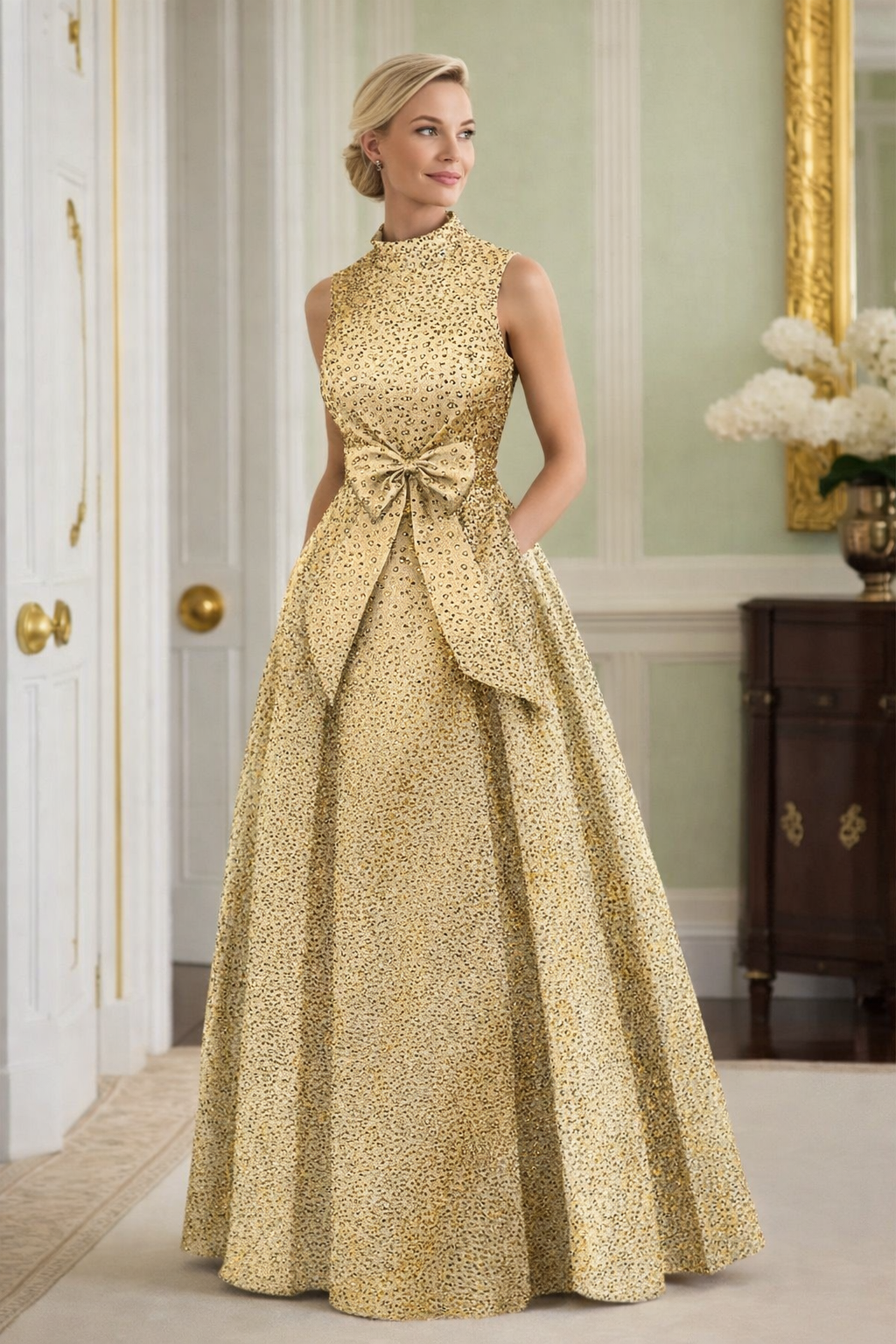
In royal traditions, gold appears at moments of continuity. Coronations. Investitures. Formal appearances that signal legitimacy rather than festivity. Gold, in these settings, is never loud. It is measured. It communicates permanence and stature without explanation.
America, interestingly, has developed its own parallel relationship with gold particularly around the New Year. New Year’s Eve weddings are a distinctly American tradition. While many cultures avoid marrying at a calendrical threshold, Americans have long embraced it. The meaning is clear: closure and beginning held in the same moment.
A New Year’s marriage is not simply celebratory. It is declarative. A line drawn between what has been and what will be. Gold belongs naturally in this context. Not as ornament, but as emphasis.
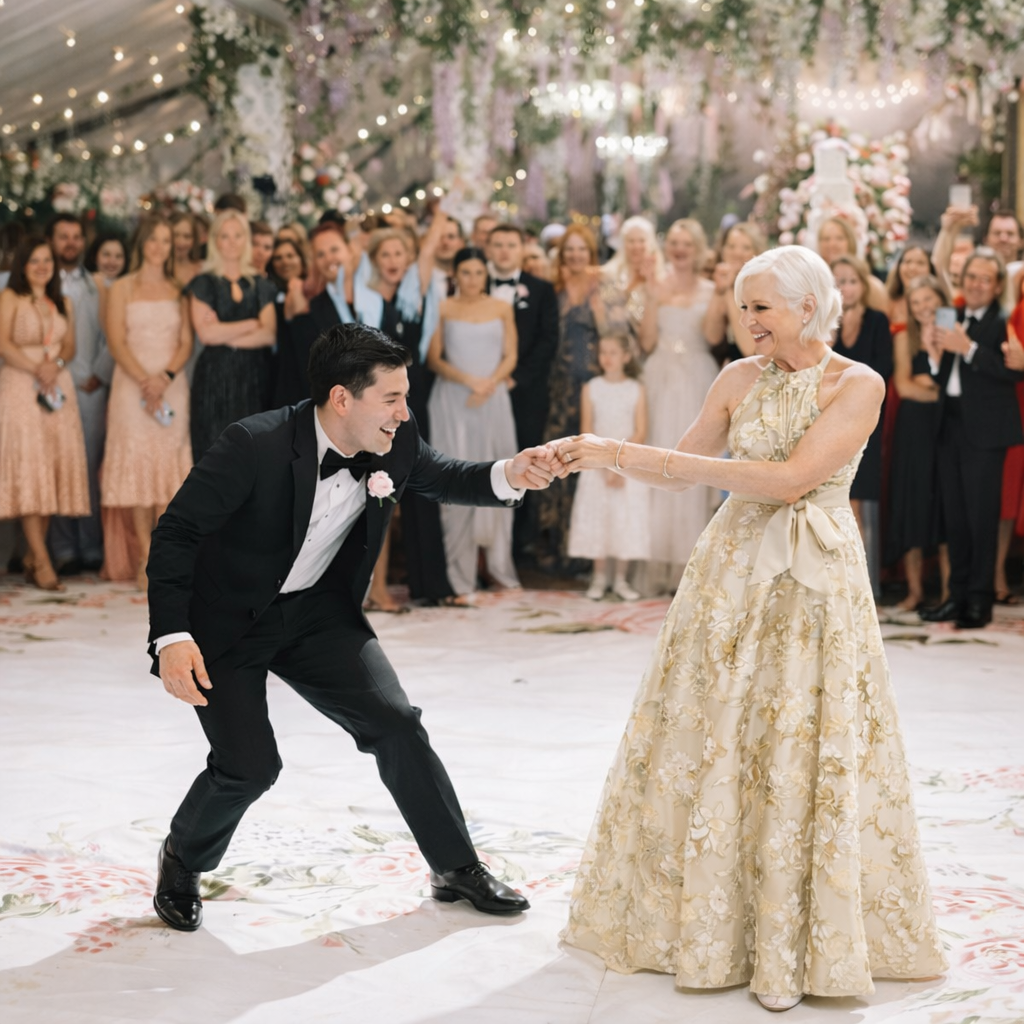
This same symbolism carries beautifully into the role of the Mother of the Bride.
A mother standing beside her daughter at a wedding is not stepping backward, nor is she competing for attention. She is visible in a new way. Honored. Grounded. Present.
Gold works here not because it draws the eye, but because it holds weight.
Importantly, gold is not singular. There is no single “gold dress.” There are warm golds and cool golds. Matte golds and luminous golds. Antique gold, champagne gold, brushed gold, soft metallics that read almost as color rather than shine.
Each interacts differently with skin tone, fabric, and silhouette. The success of gold lies not in boldness, but in calibration.
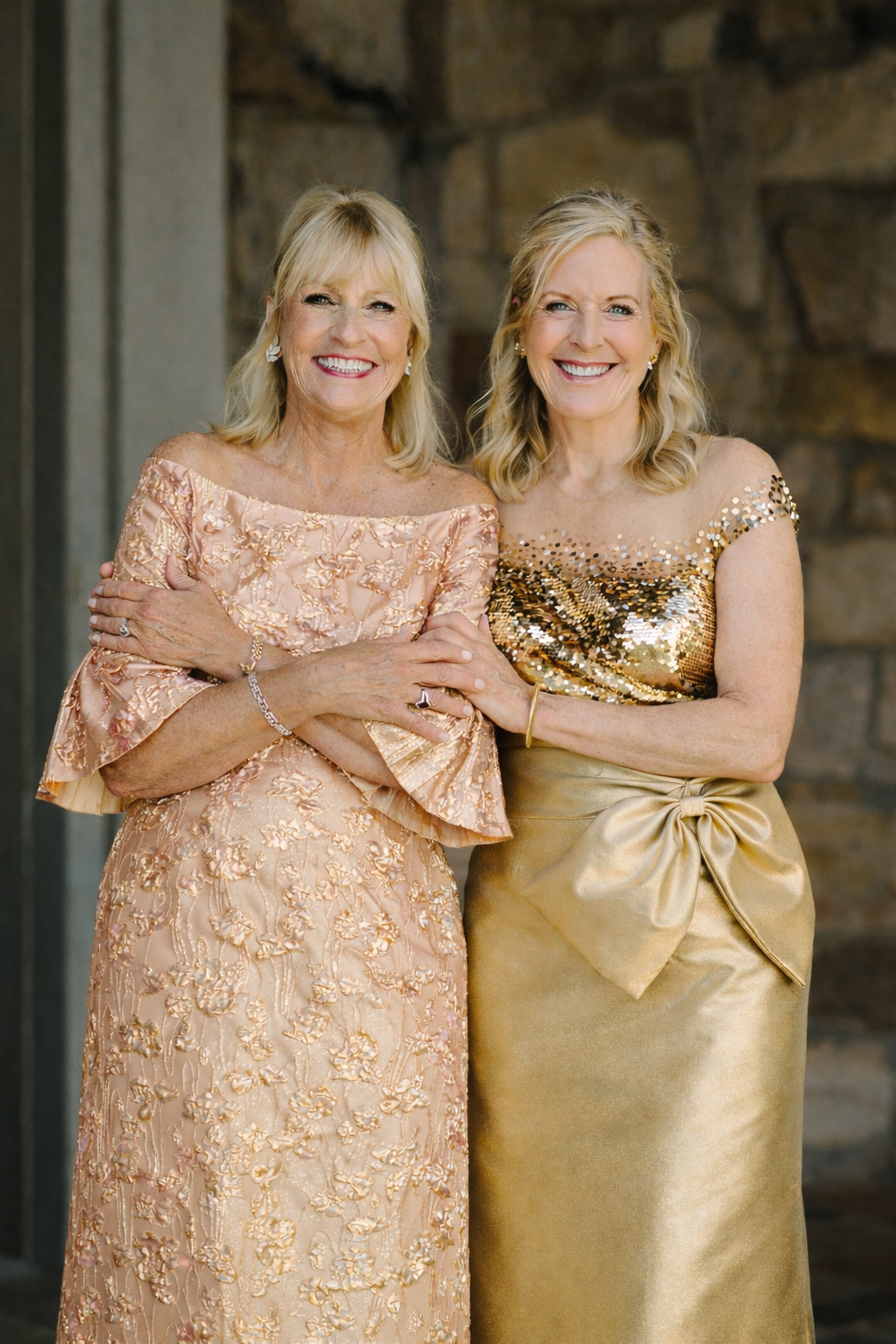
When gold works, it does so quietly. The fabric absorbs light rather than reflecting it sharply. The cut remains composed. The silhouette allows the color to register without needing reinforcement. Gold becomes a tone of presence rather than a statement of excess.
This is why gold has endured through centuries of formal dress. It adapts. It carries meaning without needing explanation. It photographs with depth. It ages gracefully when chosen with intention.
We have seen Mothers choose gold in exactly this way — not to stand out, but to stand firmly. The dresses were calm. The posture did the work. The color held the moment without overtaking it. View dresses designed for formal winter occasions
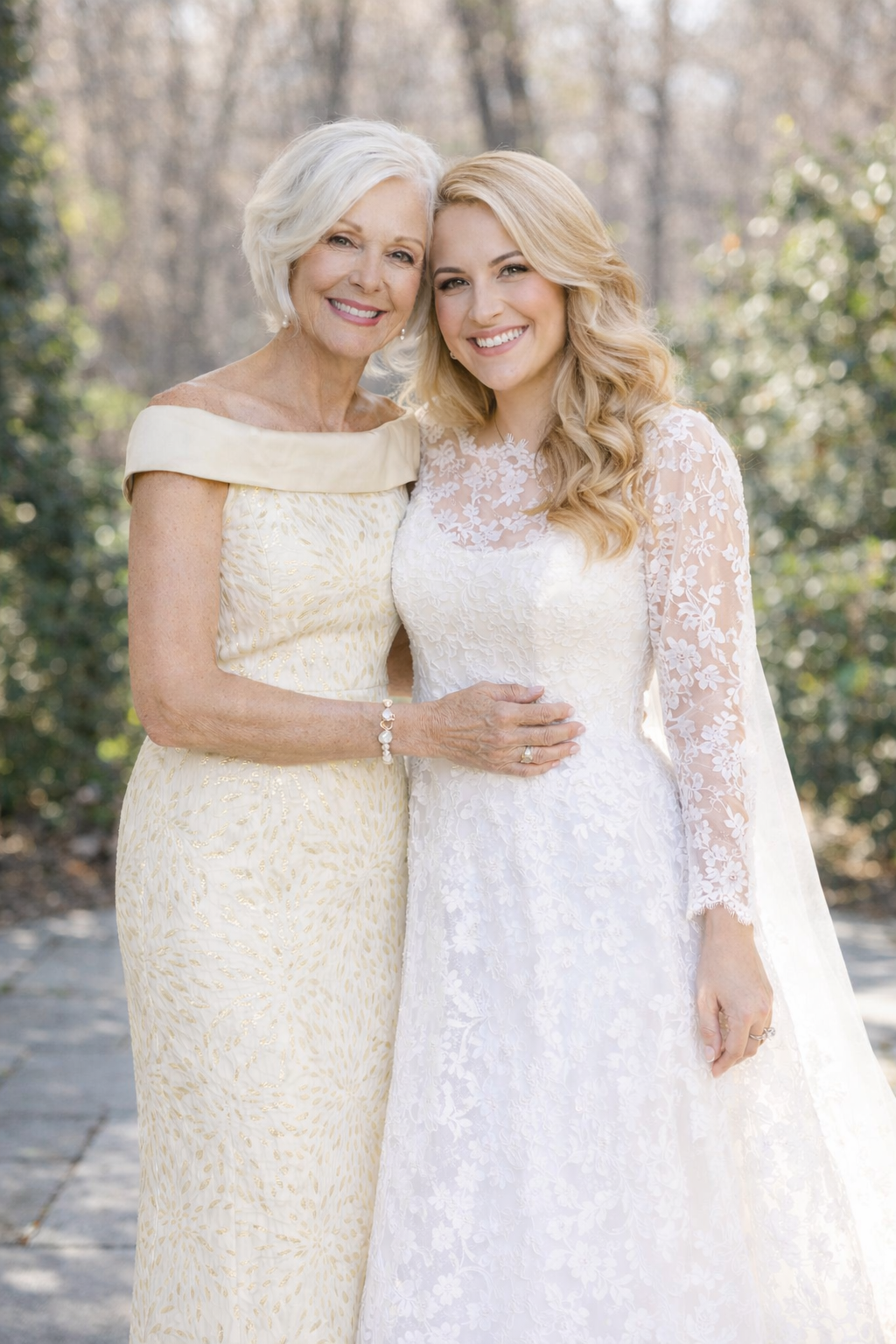
Gold is not about sparkle. It is about appropriateness.
It appears when a woman understands where she is standing, and why. When she does not need to announce herself, but is comfortable being seen.
This is why gold feels so natural at transitions. At weddings. At New Year’s. At moments that will be remembered not for how festive they were, but for what they marked.
Gold does not celebrate the moment.
It honors it.
How we think about dressing for moments that matter