Spring Tendencies in Mother of the Bride 2026 Dressing
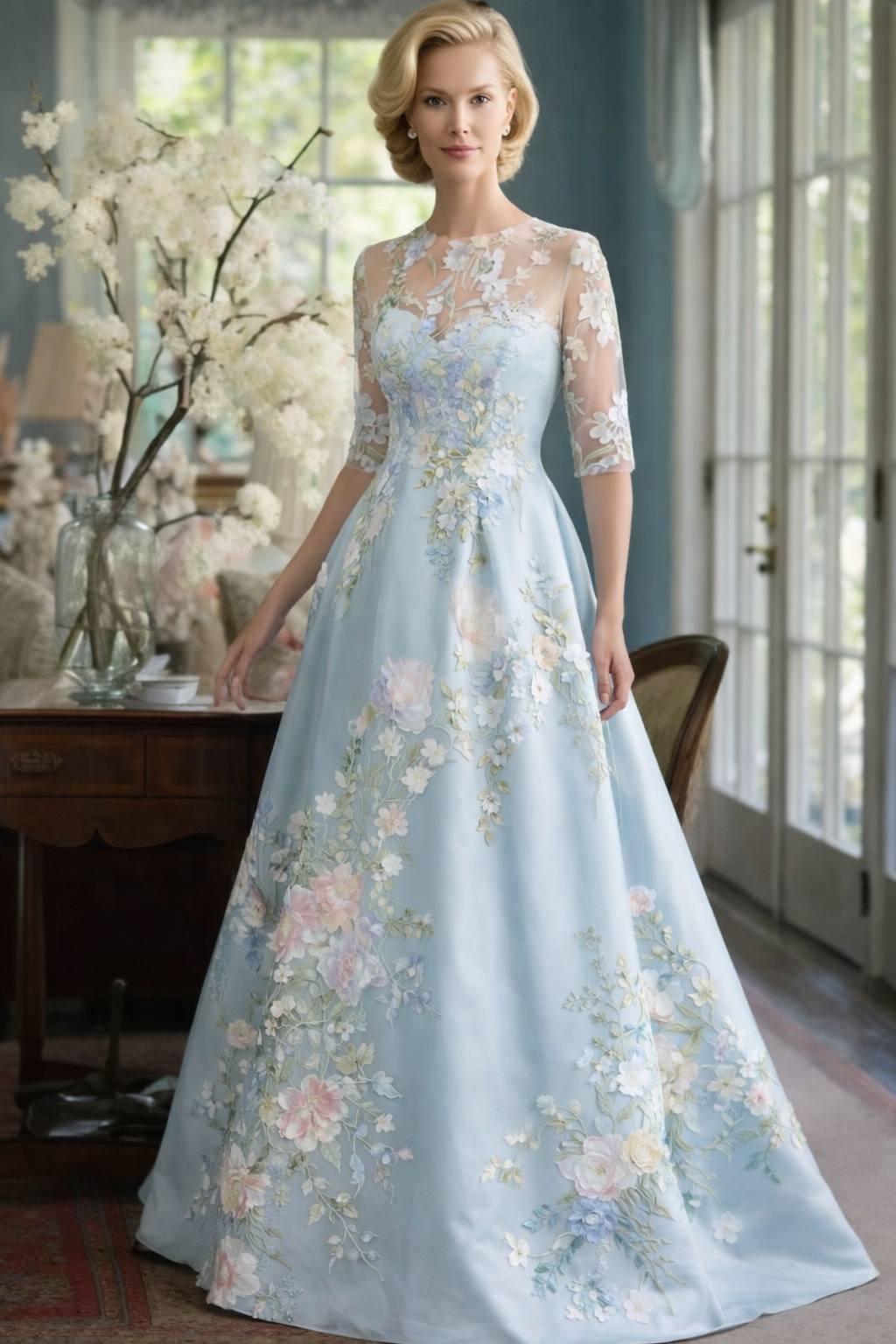
Mothers of the Bride planning Spring and Summer 2026 weddings are asking the same question: how do I look formal in daylight without resorting to heavy weight fabrics? What follows is the direction we’re seeing — not a trend, but a season’s logic.
For Fall and Winter weddings, styles gravitate toward deep velvets, sculptural silks, and richer colors. These fabrics hold their presence in candlelight and indoor spaces, and they serve the season beautifully.
But as the calendar turns, so does the language of dressing.
For Spring and Summer 2026, we are seeing a clear movement away from weight and toward dimensional, botanical expression with dresses that feel lighter, more alive, and more responsive to daylight and setting.
This isn’t a rejection of fall dressing.
It is its natural successor.
From Surface to Dimension
Spring dressing invites complexity of a different kind.
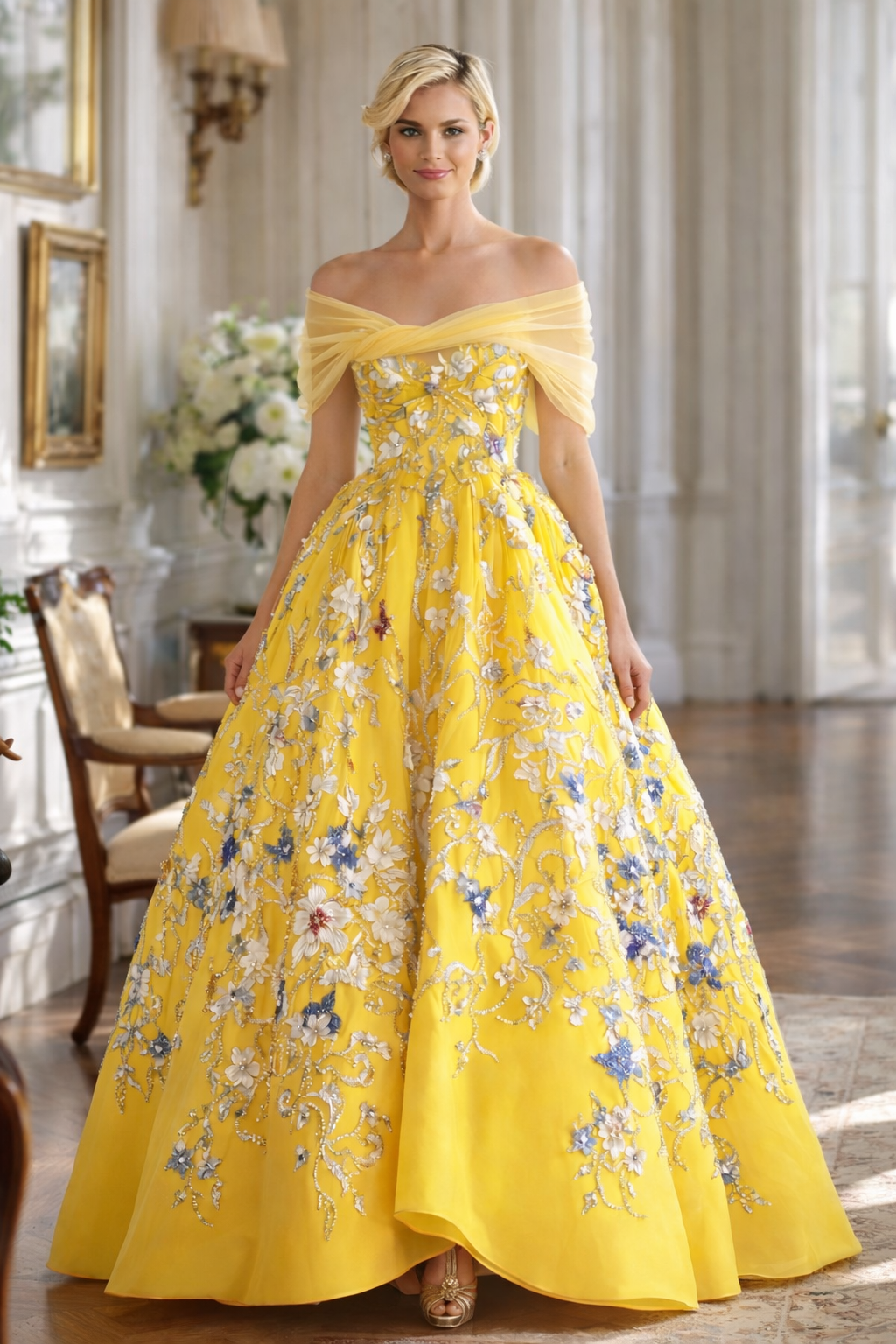
Instead of relying on the depth of a single fabric or color, these dresses build interest through embroidery, overlace, and layered florals that create movement across the silhouette.
Florals remain a natural anchor here. They bridge tradition and freshness, allowing the design work to breathe rather than overwhelm. In spring, this palette is traditionally pastels.
Floral elements are no longer decorative afterthoughts. They are integrated into the structure of the dress itself, shaping how the gown moves and photographs.
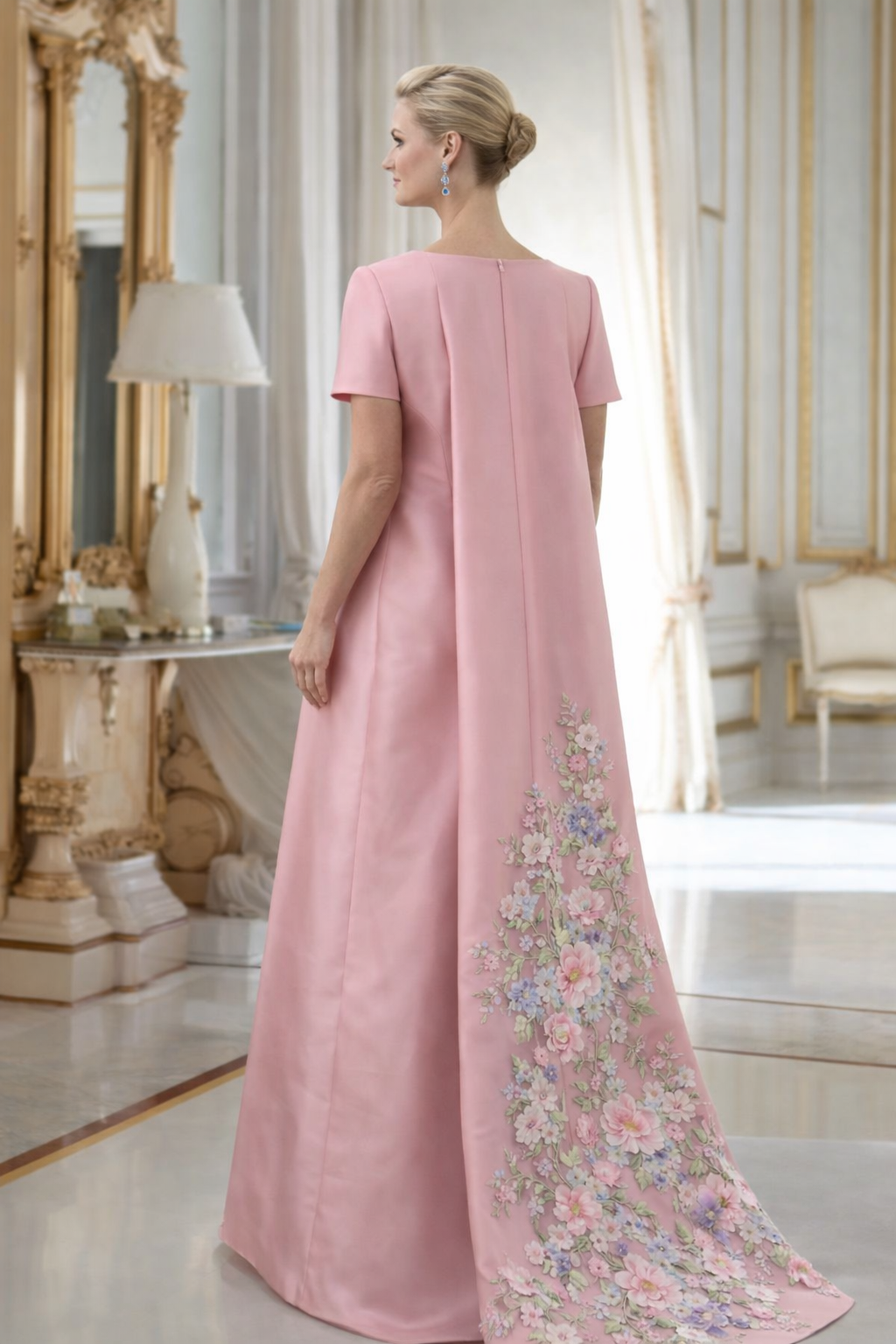
Floral detail becomes part of the dress’s architecture rather than surface decoration.
When the Garden Expands
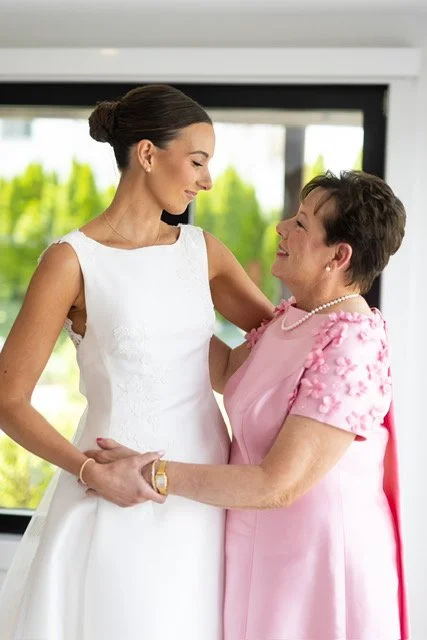
In more elaborate spring weddings, flower embellishments are often coordinated to the floral design in the bridal gown and frequently extend to the invitations. A single flower can become the central symbolic element of the entire ceremony.
Here, embroidery carries scale. Florals spread across the skirt, rise through the bodice, and create a sense of rhythm that unfolds as the wearer moves. These dresses are designed to be seen in motion during the walk down the aisle, across a garden, or through a sunlit reception.
This type of work requires the eye of a professional who can tastefully choose embellishments so the dress does not become overdone. This is where spring dressing departs most clearly from fall. The drama is no longer held within the fabric, it is released across the surface.
Color as Seasonal Expression
Soft pastels continue to anchor spring dressing, but the season increasingly makes room for more expressive color. Yellow — and, in upcoming collections, kelly green — are appearing with greater confidence, used not as accent, but as a defining element of the gown’s architecture. While soft pastels remain foundational, spring also opens the door to more expressive color.
Dressing With the Season
What we are seeing for Spring and Summer 2026 is not a trend, but a return to seasonal fluency.
As weddings move outdoors and into longer days, Mothers of the Bride are choosing gowns that reflect that environment: lighter in feel, richer in dimension, and expressive without excess.
Fall asked for depth and restraint.
Spring asks for life, movement, and bloom.
And the most successful dresses answer that call naturally.