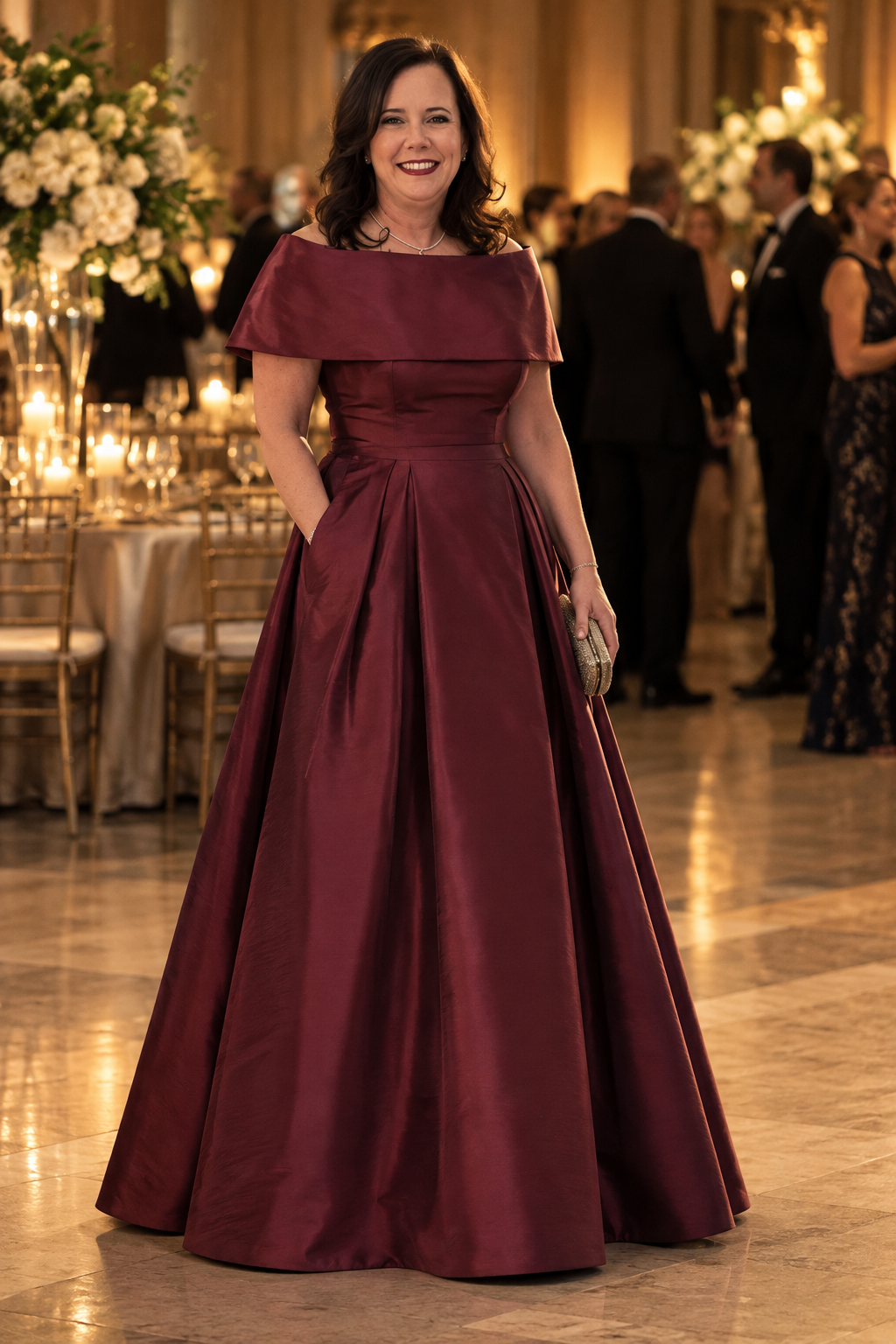
The best fabric for a mother of the bride gown is decided long before the first fitting, in the photographs that outlast the evening. This is the second most important dress at the wedding, and it will be seen in candlelight, in flash, and in the unforgiving light of a reception hall. Fabric determines how all of it reads. One direction holds across nearly every celebration: a fabric with structure and a quiet finish, judged under the light it will be worn in. Here is how the decision comes together.
The Best Fabric for a Mother of the Bride Gown Photographs Quietly
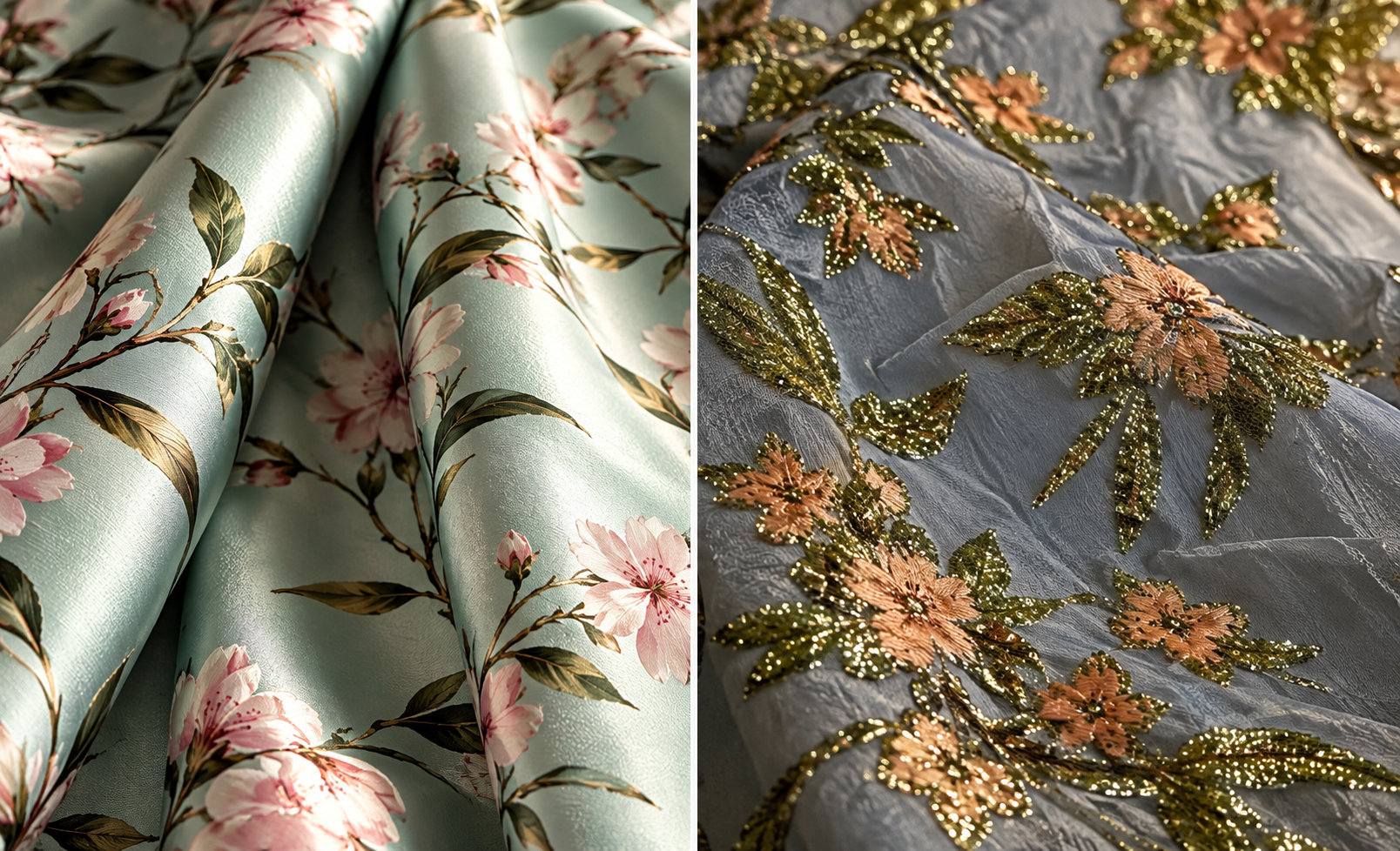
Light is the first test. Matte and softly lustrous fabrics hold their color through flash and venue lighting. High-shine fabrics throw bright patches across the hip and bodice and draw the eye away from the face. Most mother of bride dress fabric guides sort cloth by season and weight. Few address what happens when a photographer's flash meets it, and that is where gowns succeed or fail.
The rule is simple: choose a finish that absorbs light before it reflects it, and view the swatch in the light of your venue, not the light of a showroom. At the atelier, this is part of selection from the first conversation, because a gown that photographs well is a gown that reads as intended in every frame of the album, from the processional to the last dance. The details are not details. The details make the product.
Lightweight Brocade Is a Good Starting Point
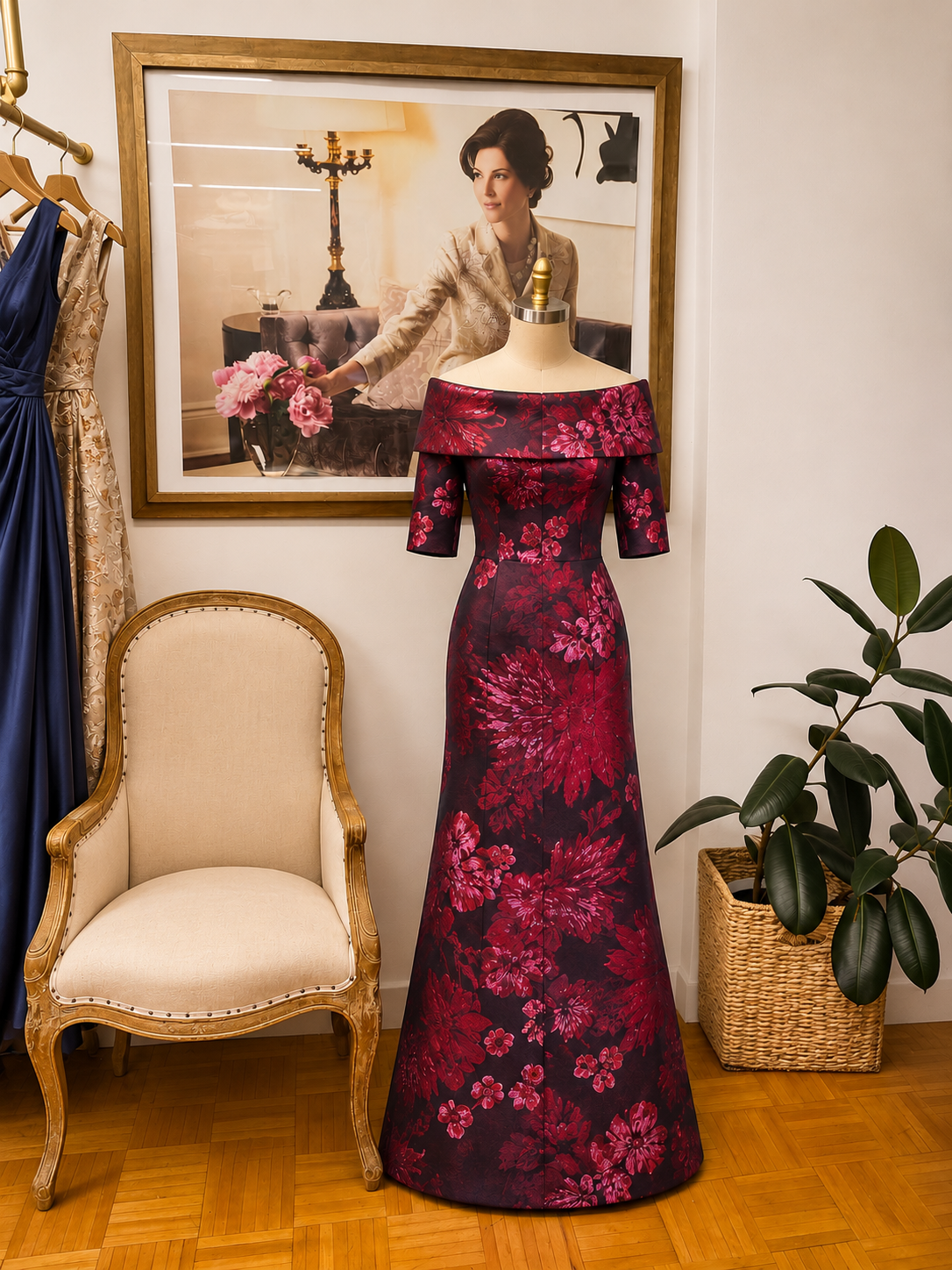
One fabric stands out for most women: brocade. It drapes without clinging, moves cleanly through a processional, holds its line across a full evening, and carries color with depth. For a formal gown, what fabric you choose matters less than whether it can stand, sit, and dance without losing its shape, and brocade does all three.
The exceptions are defined by the occasion. Mikado is the choice when the silhouette calls for architecture, a structured A-line or a defined waist. Velvet belongs to fall and winter celebrations and holiday galas, where its depth is the point. Chiffon and georgette suit a garden or a beach, and they ask for more care in the cut. Silk versus chiffon is not a matter of taste; it is a matter of setting.
Weight and Structure Decide the Evening
Weight tells the truth about a gown. Too light, and it clings and wrinkles by the cocktail hour. Too heavy, and it tires you before the first dance. Autumn rooms are warm with guests and cold at the door, so a mid-weight silk-wool with a tailored three-quarter or long sleeve in the gown's own fabric is the right balance.
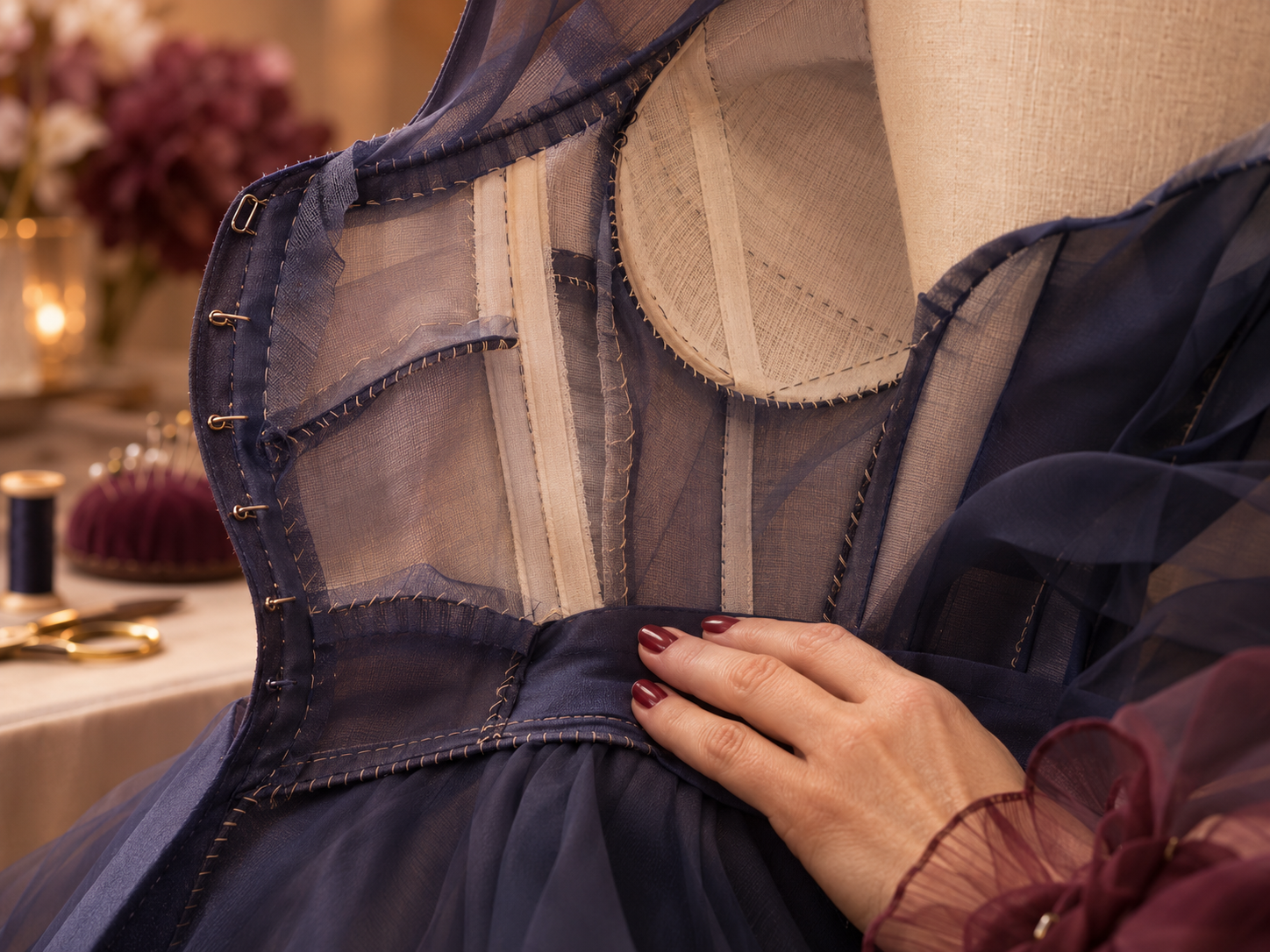
Structure lives inside the gown: interlining, a supported bodice, a hem weighted to fall correctly. Off the rack, none of this is chosen for you. It is chosen for a different woman, in a different season. Bespoke means every layer is selected for your event, your height in your shoes, and the room you will stand in. The result is a gown that feels effortless because nothing about it was left to chance.
Where Fabric Selection Begins
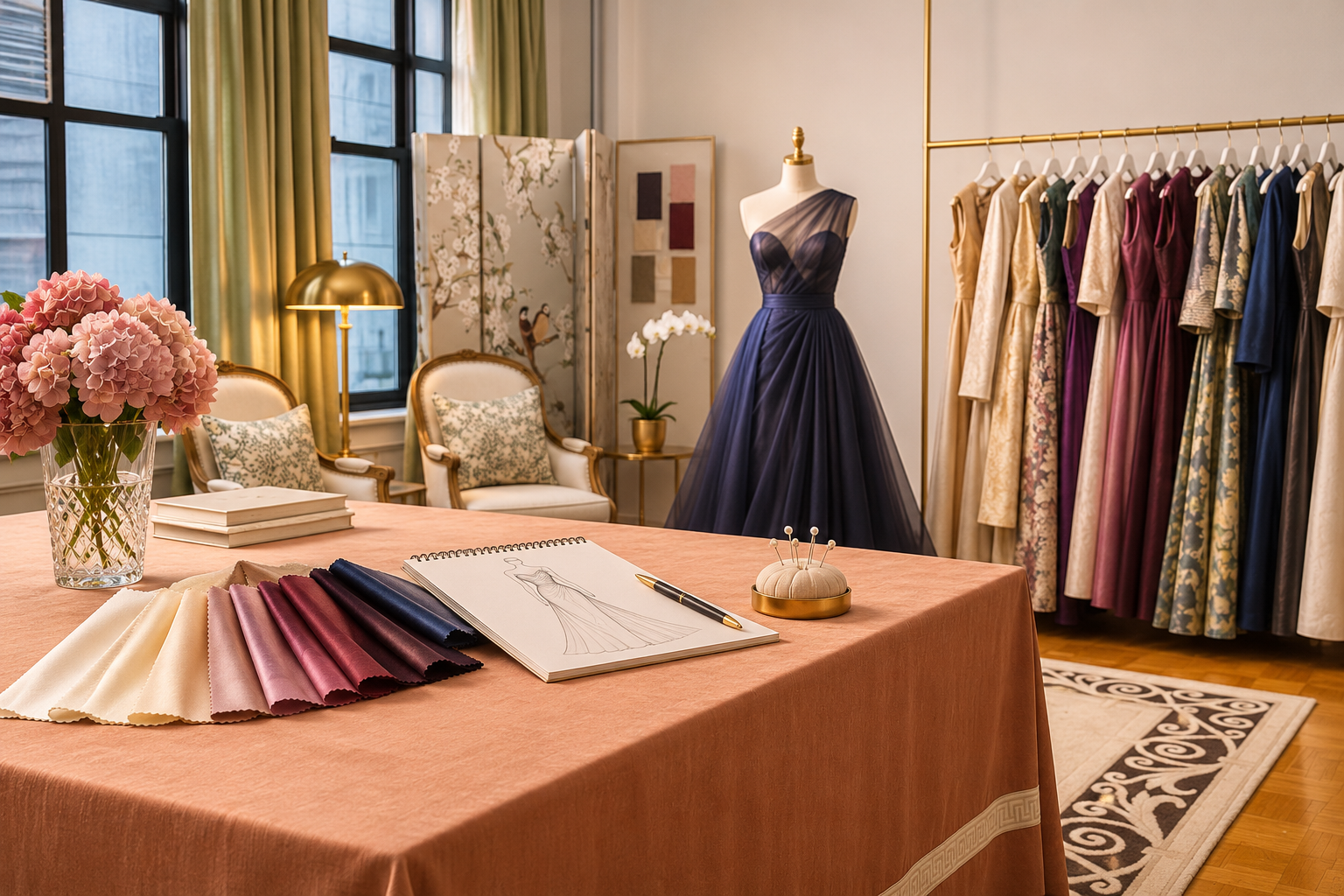
Selecting the right cloth and building the gown correctly takes twelve to sixteen weeks. Our process, Couture, Bespoke, Remote, can take place entirely at a distance. Swatches arrive at your door, you view them in the light of your venue, and every fitting is guided from home. We call it Guided Couture. Made for the occasion with you in mind.
Fabric is the first decision, the one every other detail follows, and this is the right moment to make it while everything is aligned. Your consultation is the next step, already on the atelier calendar. Book it, and your swatches are on their way.`