Mother of the Bride Dress for a Black Tie Wedding: What to Consider Before You Choose
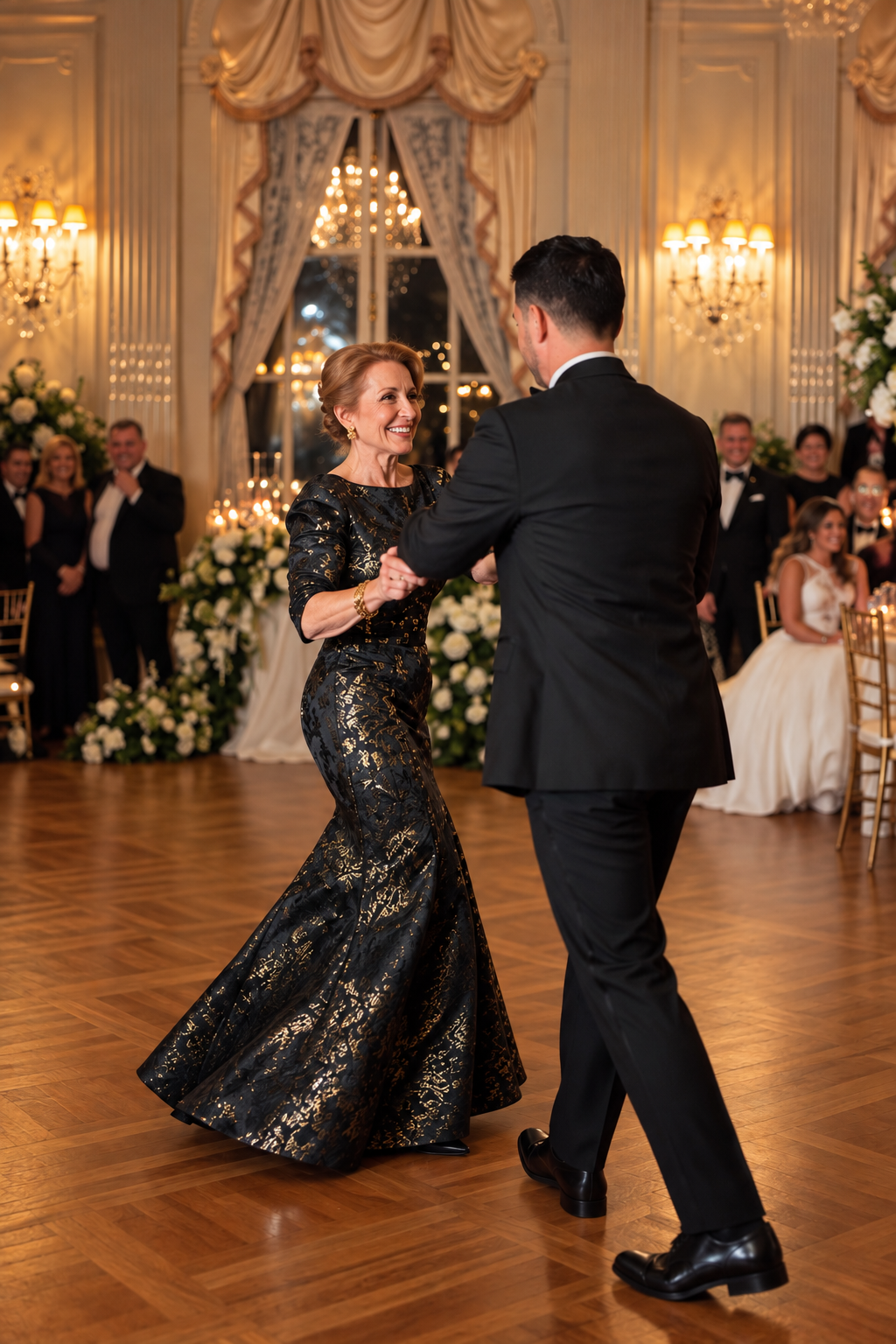
Finding a gown that feels elegant, comfortable, and entirely your own shouldn’t be the hardest part of preparing for the wedding.
Your son or daughter is getting married, and the invitation says black tie. You want to look beautiful, feel appropriately dressed, and enjoy the celebration without worrying about what you’re wearing.
Yet finding the right gown can take some thought. You may love a color but prefer a different silhouette. A beautiful neckline may offer less coverage than you want. A dress that looks striking while standing may feel restrictive when you sit.
The best place to begin is with the occasion—and with what helps you feel like yourself.
1. Begin With the Occasion, Not the Dress
A black-tie wedding generally calls for a floor-length evening gown, but the dress code is only part of the decision.
Consider the venue, the season, and the setting. A grand ballroom may suit a structured silhouette or a richly colored fabric. An outdoor celebration may call for something lighter, with particular attention to temperature, footwear, and ease of movement.
If the invitation says black tie optional, a sophisticated mid-length dress may also be appropriate. When you’re unsure, ask the couple about the formality they have in mind.
Let the setting guide you while leaving room for your own style.
2. Find a Silhouette That Feels Right
An A-line, column, or full-skirted gown can all work beautifully for black tie. What matters is how the dress fits your proportions and feels as you move.
You may prefer coverage through the arms, definition at the waist, or a skirt with a little more room. These preferences are useful starting points when deciding what to try.
Look beyond the first impression in the mirror. You’ll be sitting, standing, greeting guests, and perhaps dancing. During a fitting, sit down, walk a few steps, and raise your arms as though you’re hugging someone. Notice whether the neckline stays in place and whether you can move without repeatedly adjusting the dress.
Bring your evening shoes to the hem fitting. Even a small change in heel height can affect how a floor-length gown falls.
3. Consider Fabric Alongside the Design
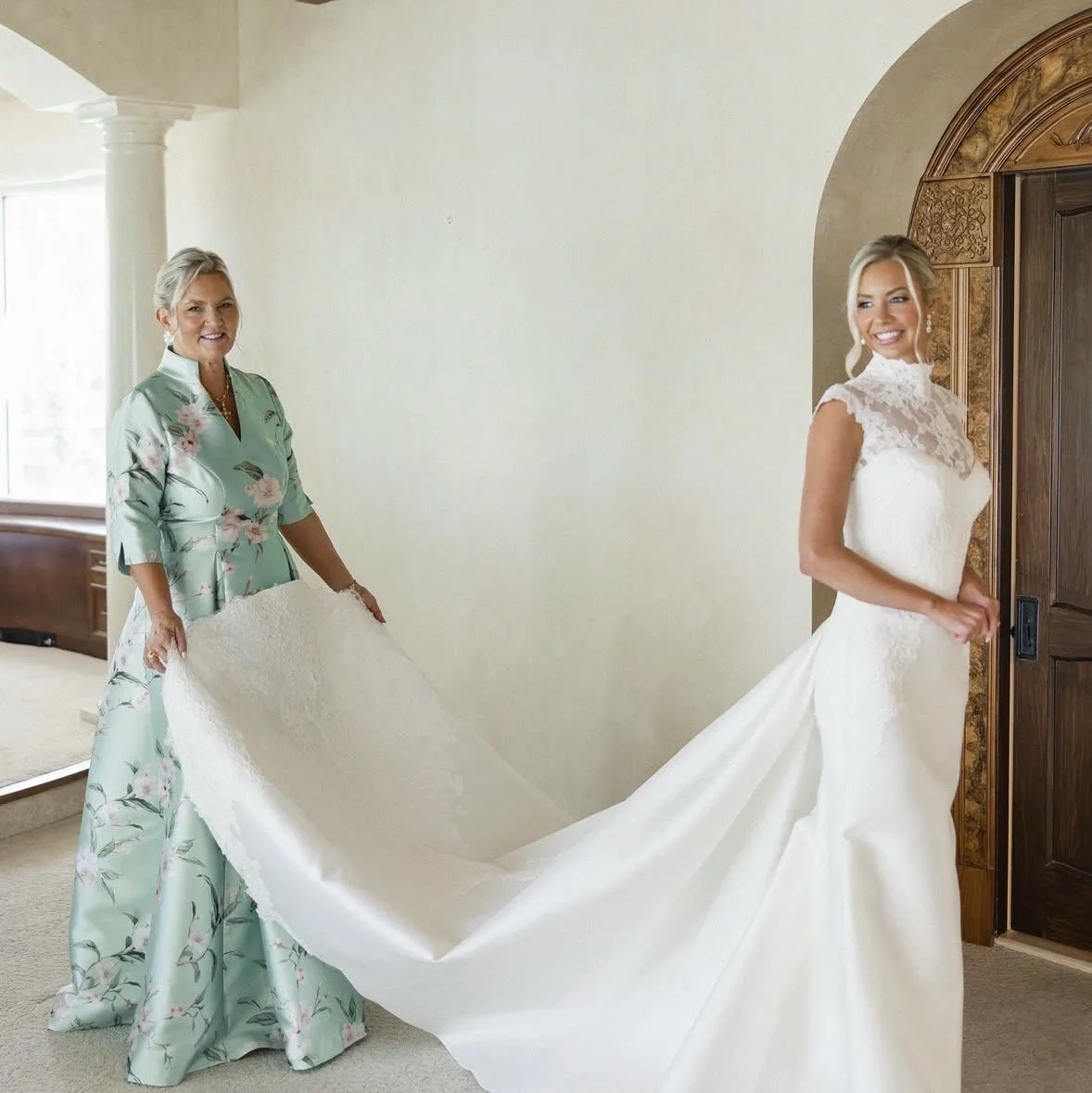
Fabric influences a gown’s shape, movement, and comfort as much as its cut.
Silk Mikado and silk faille can lend definition to structured bodices and fuller skirts. Softer textiles may suit designs with more fluid movement. Silk-wool blends offer another possibility for a gown with a more understated surface.
Think about the conditions in which you’ll wear the dress. Will you spend time outdoors? Does the fabric feel comfortable against your skin? Can you sit easily in the finished silhouette?
If you want sleeves, consider them early in the selection process. Three-quarter or full-length sleeves can provide coverage while remaining an integral part of the design. A wrap or jacket is another option, especially when temperatures may change throughout the evening.
4. Choose Color With Confidence
Black tie leaves room for a wide range of colors. Midnight blue, emerald, garnet, and plum can be beautiful choices, but a softer shade may feel equally right for the setting and your personal style.
Before settling on a color, speak with the couple about the wedding palette and any preferences they have for family attire. Coordination doesn’t have to mean matching the bridal party exactly; complementary shades can create a harmonious effect in photographs.
Floral prints can also work for black tie when the fabric, scale, and silhouette feel sufficiently formal. Consider the whole gown rather than judging the print on its own.
Whenever possible, view fabric samples in both natural and indoor light. If photographs are a concern, take a few pictures of the sample near your face to see how the color reads.
5. When Nothing Off the Rack Comes Together
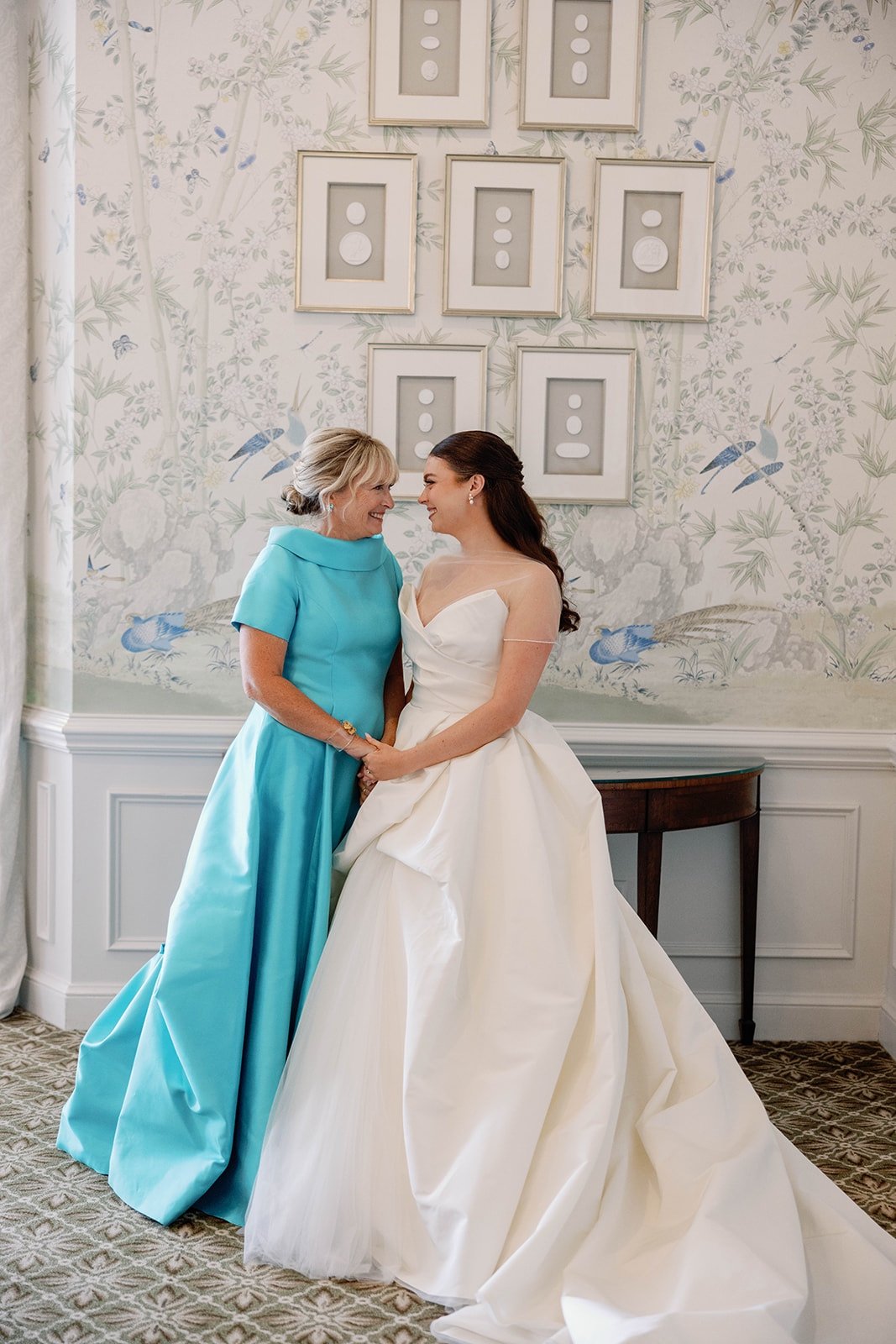
Sometimes the search reveals a consistent gap: you find the silhouette you want, but not the sleeves; the right fabric, but not the color; or a lovely gown that would require substantial changes.
At that point, bespoke design may be worth considering. It allows the silhouette, coverage, fabric, and color to be developed together, with fittings to assess proportions and comfort before the gown is completed.
At Gramercy Atelier, that process begins with a personal conversation about the wedding, your preferences, and how you want to feel. The details you’ve found difficult during your search can help guide the design.
Whether you choose an existing gown or explore a custom one, understanding your priorities will make the decision clearer.
6. Leave Time for Fittings and Finishing Details
Begin looking well before the wedding, especially if you’re considering bespoke design. Ask about the full timeline before committing, including fabric availability, fittings, alterations, and delivery.
Once you’ve chosen your gown, bring the shoes and undergarments you intend to wear to your fittings. Try the complete outfit together—including jewelry and any wrap or jacket—while there is still time to make adjustments.
If the wedding is approaching quickly, share the date at the outset. A clear timeline will help you focus on options that can be ready comfortably.
Feel Comfortable, Be Present
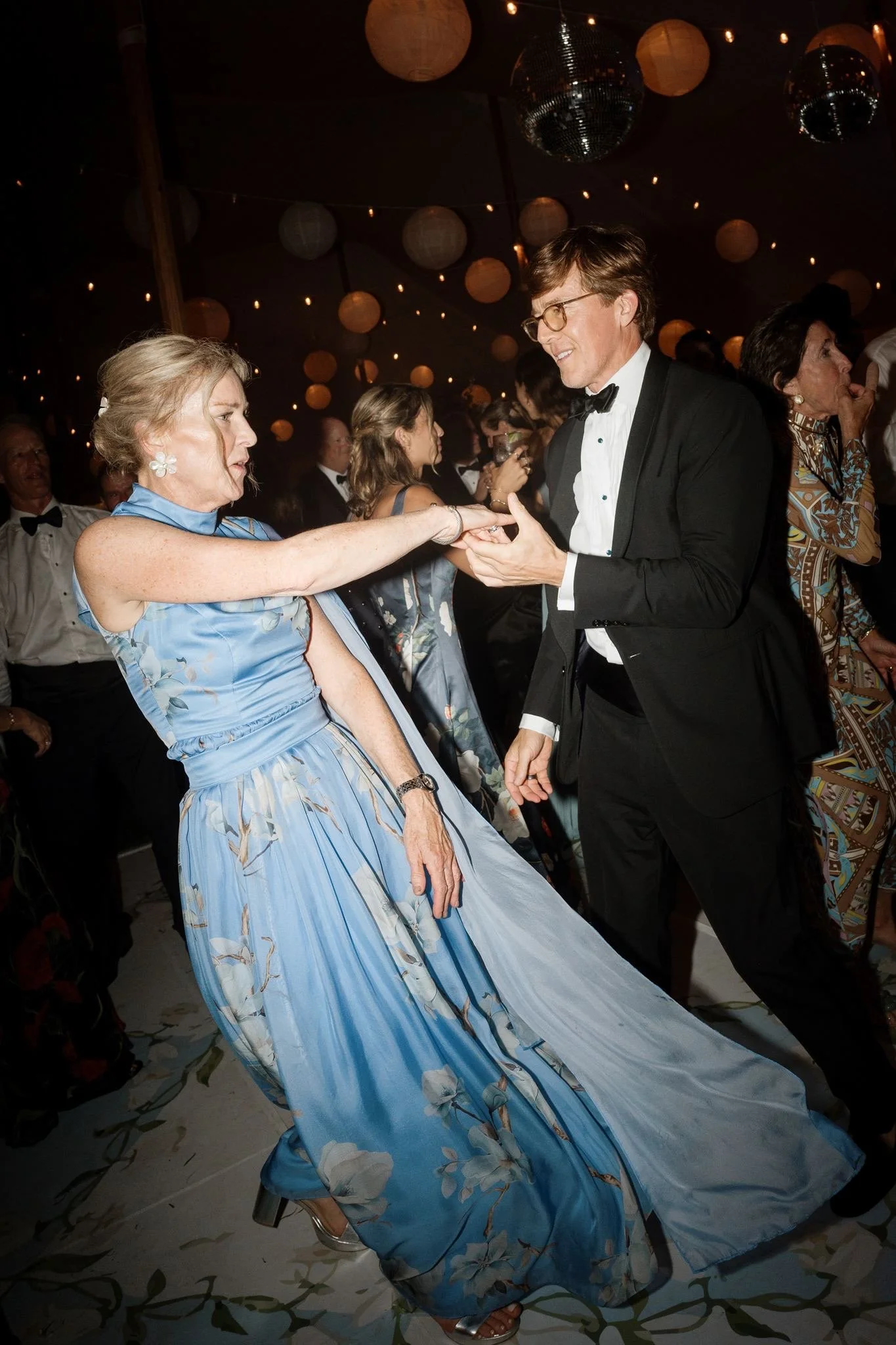
Your gown will be part of photographs and memories you’ll return to for years. It should also let you enjoy the day as it happens: greeting family, embracing your children, and celebrating without distraction.
Choose a dress that suits the occasion, moves comfortably, and feels like something you’re happy to wear. Those qualities matter well beyond the first look in the mirror.
If you’d like guidance finding a mother of the bride or groom gown for a black-tie wedding, we’d be pleased to help.
Schedule Your Complimentary Consultation
10:54 AM